
Research framework
AeroPropSim
Estimate propeller thrust and torque, describe the slipstream, and examine how it changes wing loading. The documented X-57 and PROWIM studies use its propeller and wing models.
AeroPropSim methodsComputational engineering & scientific software
We develop computational methods and scientific software to make complex aerodynamic and propulsion systems easier to understand, explore and design.
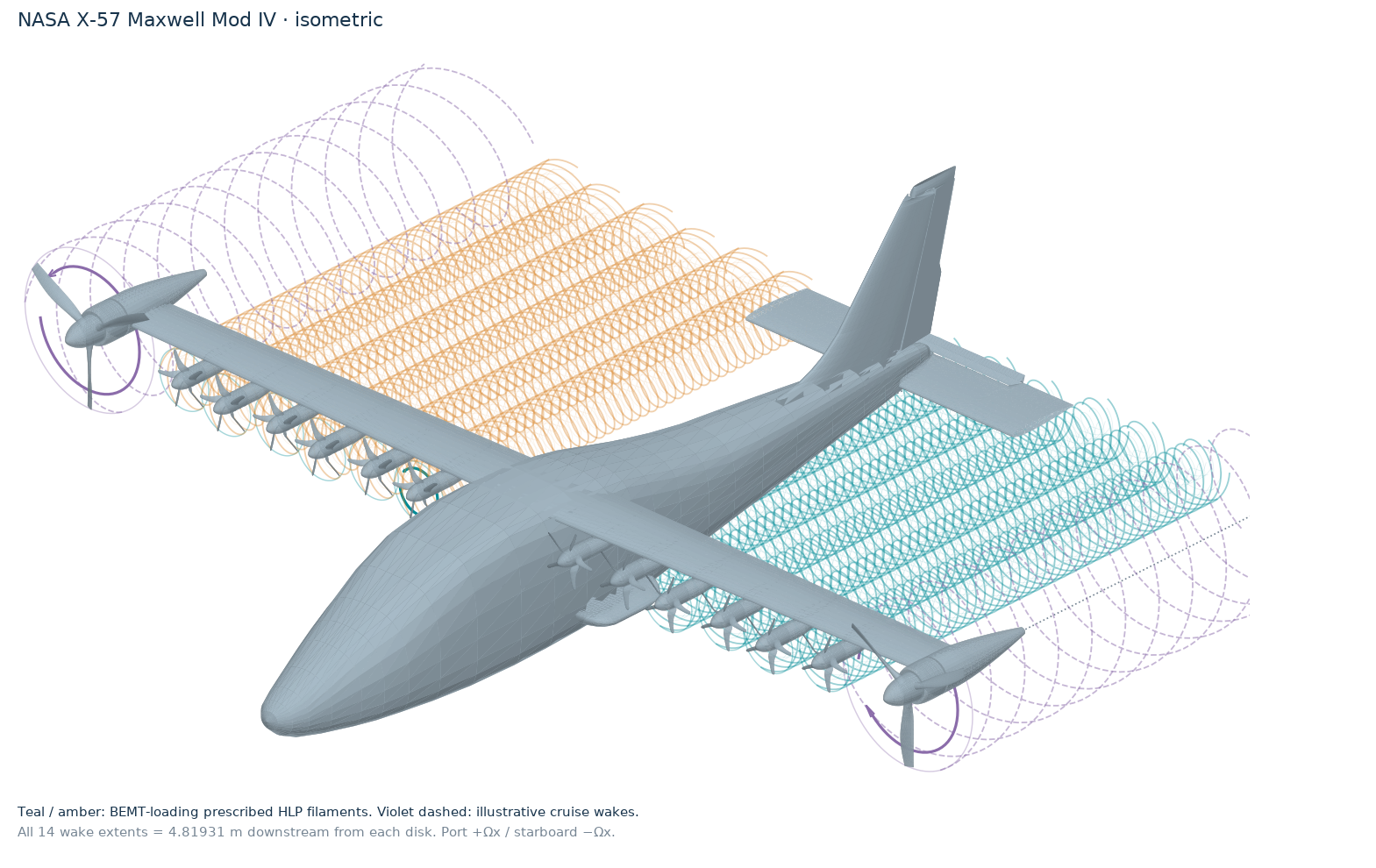
Propeller aerodynamics
Wake and wing interaction
Scientific software
The engineering challenge
Propeller slipstreams change the flow over the wing. Position, rotation and operating condition can alter where the wing carries load, which matters when comparing configurations.
Detailed CFD and experiments help resolve complex flow physics. For early design, we develop models that capture the effects needed for the question at hand, so engineers can compare more configurations and identify where higher fidelity or testing is needed.
Technology
Research framework
Estimate propeller thrust and torque, describe the slipstream, and examine how it changes wing loading. The documented X-57 and PROWIM studies use its propeller and wing models.
AeroPropSim methodsBeta development
Brings propeller and wake methods together with steady and unsteady wing aerodynamics and flexible-wing models in one case workflow. Experimental tonal-noise modelling extends the research.
FlexiPropSim capabilities and statusResearch & demonstrations
Numerical checks test whether a model behaves as intended. Comparisons with measurements test how well it represents the physics under specific conditions.
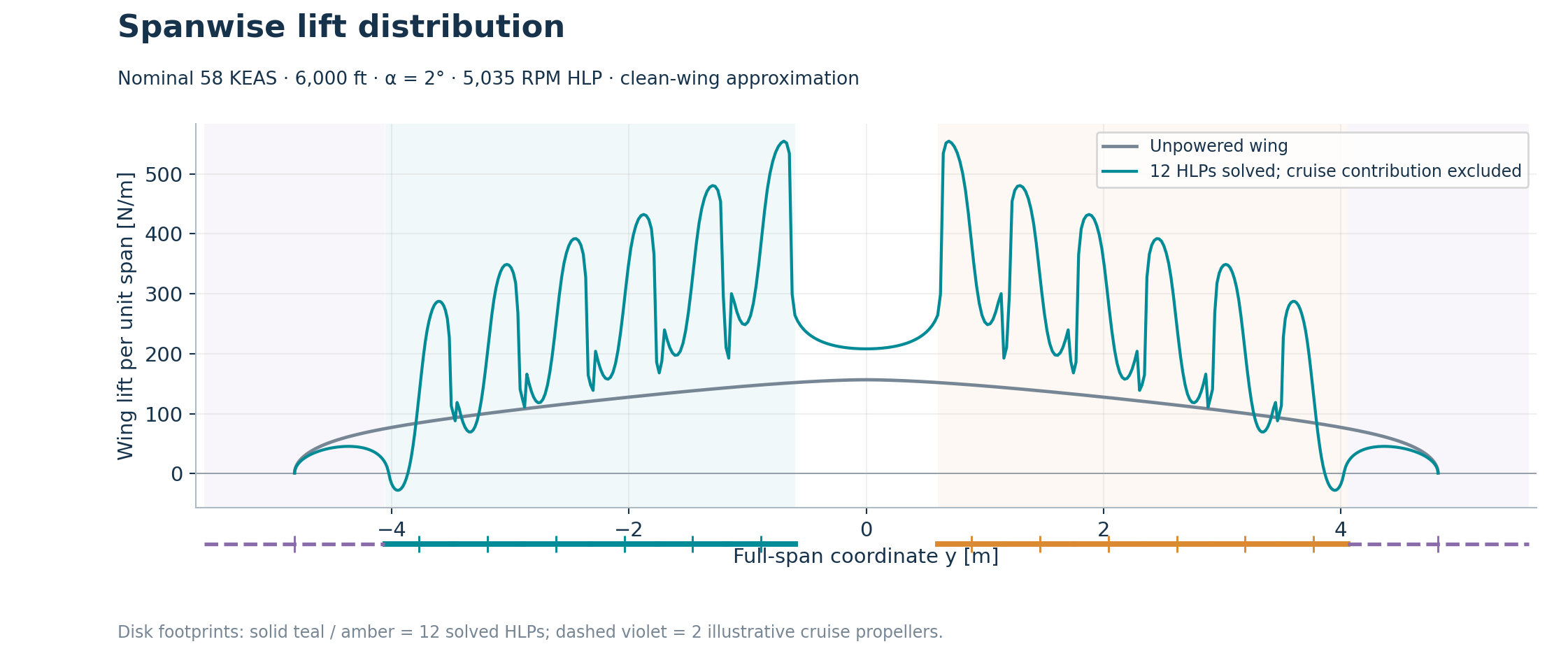
Aircraft-scale demonstration
How do twelve high-lift propellers redistribute loading on a clean main wing? Compare computed baseline and powered cases, with conditions, limitations and downloadable data.
Read the X-57 study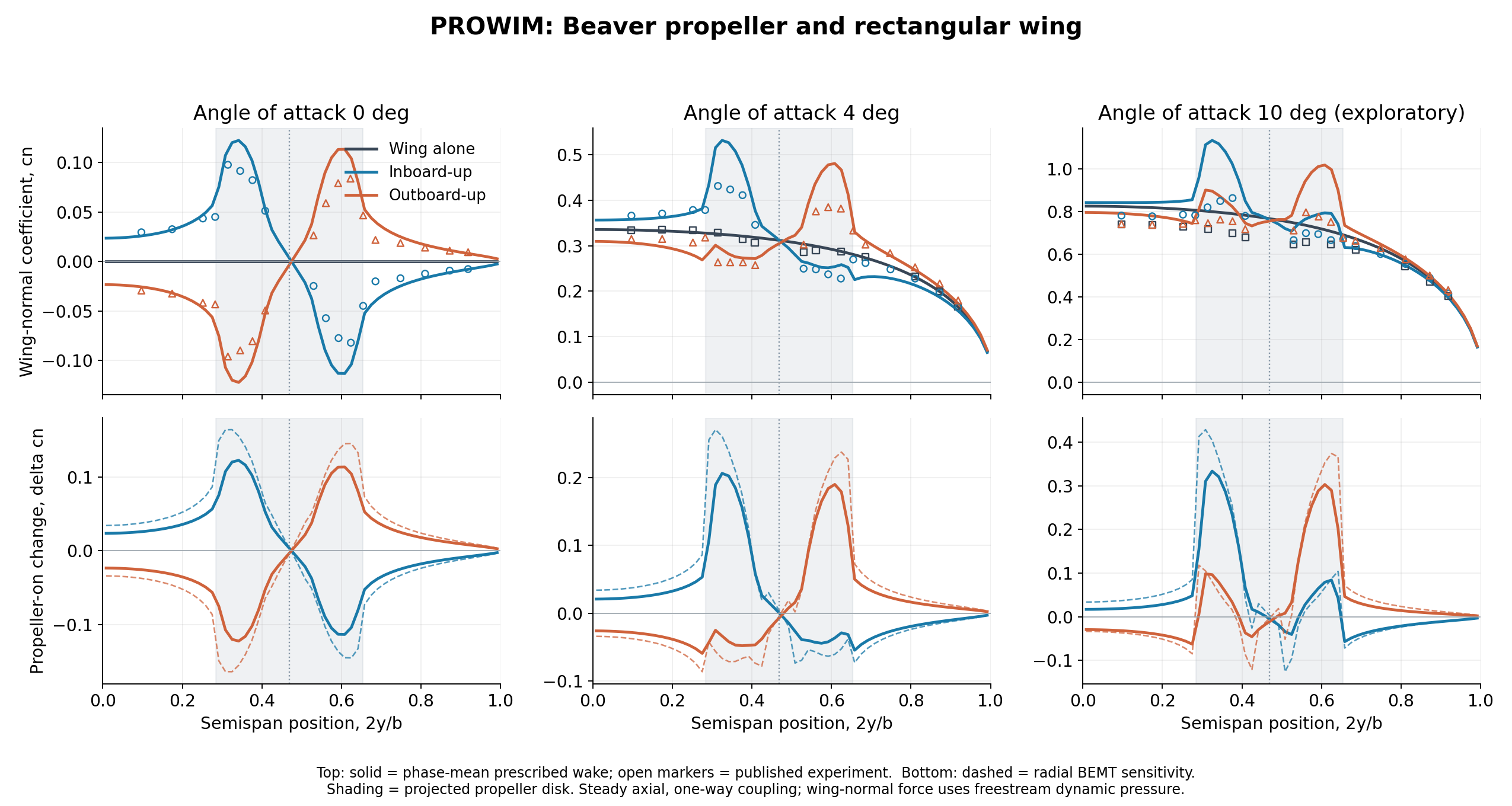
Experimental comparison
How does rotation direction influence spanwise wing loading? Compare prescribed-wake predictions with published wind-tunnel measurements at 0° and 4°.
Read the PROWIM studyEngineering workflow
We use AI to assist scientific software development, technical research, documentation and test preparation. Engineers review the code, assumptions, numerical results and evidence before drawing conclusions.
How we develop and verify engineering softwareThe team
Our team brings together computational aerodynamics and propulsion integration, advanced CFD and numerical methods, flight dynamics and aeroelasticity, and computational aeroacoustics.
Founder & Managing Director
Dr Zhuoneng Li is an aerospace engineer specialising in computational fluid dynamics (CFD), propulsion–airframe interactions, and advanced aircraft configurations.
He earned his PhD at Cranfield University's Centre for Computational Engineering before continuing as a postdoctoral research fellow at the University of Southampton, where he contributed to collaborative aerospace research involving Airbus.
His expertise encompasses aerodynamic modelling, numerical simulation, and computational tool development.
As SanHang's founder, he leads the company's engineering strategy, technology development, and industrial partnerships, focusing on translating advanced simulation capabilities into practical engineering solutions.
Principal Computational Engineer
Dr Vadim Maltsev is a computational engineer specialising in high-fidelity CFD, advanced numerical methods, and aerodynamic modelling.
He earned his PhD at Cranfield University's Centre for Computational Engineering before continuing as a postdoctoral research fellow at the University of Southampton, where he collaborated on aerospace research involving Airbus.
Combining expertise in computational algorithm development, multiphysics simulation, and industrial engineering experience at Baker Hughes, Vadim guides SanHang's numerical methodology, software development, and technical validation.
Technical Advisor on Flight Dynamics & Aeroelasticity
Dr Amir Hossein Modarres Aval is an aerospace researcher specialising in flight dynamics, aeroelasticity, nonlinear structural dynamics and computational mechanics.
He holds a PhD in Mechanical Engineering from Amirkabir University of Technology and has undertaken aeroelasticity research at Duke University. He worked with Zhuoneng and Vadim in the same research group at the University of Southampton for three years, contributing to research on flexible aircraft and advanced aerodynamic and structural modelling.
Amir is an Assistant Professor in Aerospace Engineering at Amirkabir University of Technology. His research includes multibody aircraft dynamics, hinged wingtips, flexible structures and rotor-blade aeroelasticity.
As a Technical Advisor to SanHang, he provides specialist perspective on flight-dynamics and aeroelastic methods, including potential coupling between aerodynamic and structural models.
Principal Aeroacoustics Engineer
Dr Yuan He is a computational engineer and aeroacoustics researcher specialising in aerodynamic noise prediction, compressible-flow simulation and computational aeroacoustics.
He earned his PhD in Computational Fluid Dynamics and Aeroacoustics at the University of Southampton's Institute of Sound and Vibration Research and works as a Research Fellow at its Airbus Noise Technology Centre.
His research includes high-fidelity simulations, airframe and jet noise, acoustic source identification and aerodynamic-noise modelling. He also brings industrial experience in gas-turbine aerodynamic design and compressible-flow analysis.
As SanHang's Principal Aeroacoustics Engineer, Yuan guides the exploration and development of acoustic-prediction methods for AeroPropSim, alongside broader technical assessment of advanced computational engineering approaches.
Collaborate with SanHang
We welcome enquiries about aerodynamic analysis, scientific software development, computational methods and research collaboration. Tell us what you need to understand, which configurations you are comparing, and what data you already have.